
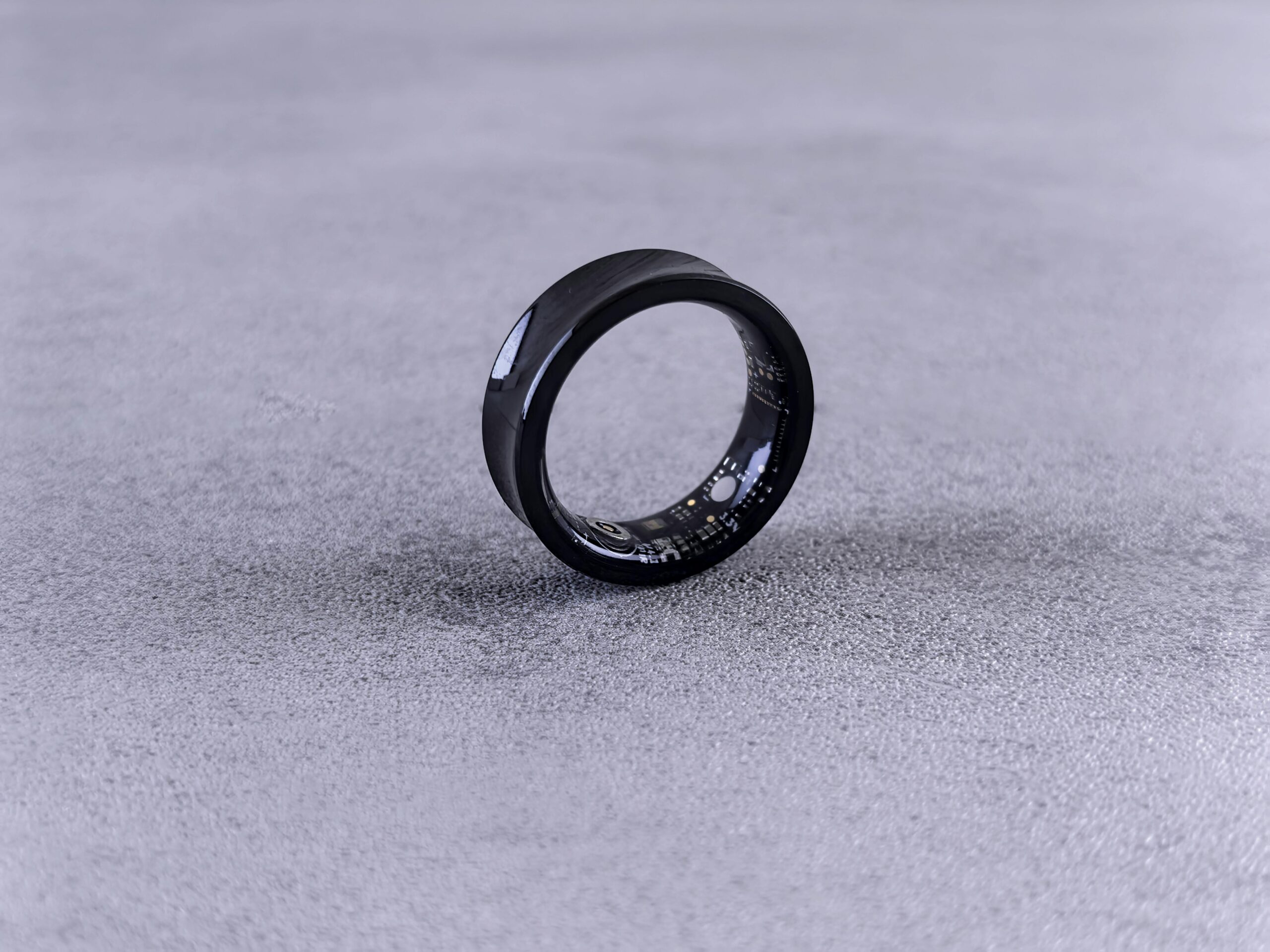

We live in a time where we can measure almost everything by ourselves: sleep cycles, heart rate variability, stress, glucose, metabolism. Tracking our biometrics is popular with biohackers and those who want to understand their body.
But just because we can track it… does it mean we should? Tracking can give you invaluable information that makes the unknown known and helps you make better lifestyle decisions. But…..it could also backfire, causing stress and obsessive focus on something that may fix itself if left alone.
Sleep disturbances are common among people with an imbalanced gut and nervous system. Especially perimenopausal and post menopausal women, as age and hormones can greatly influence sleep.
I have been wearing an Oura Ring for more than two years now and will tell you if I think it’s worthwhile for improving health and sleep.
I didn’t buy my Oura Ring for sleep issues. I needed to understand if my body needed recovery. I started exercising regularly and didn’t know when to push myself and when to rest. The Oura Ring gives you a score to determine how well you recover from exercise or from the stressors of the previous day. Remember exercise can be a stressor too.
It ended up teaching me about my sleep and HRV (heart rate variability) which is a measure of how well your nervous system functions.
So let’s talk about what the ring actually tracks and the relationship to the data.
What the Oura Ring Actually Tracks
The Oura Health Oura Ring tracks:
- Sleep duration (light, REM, deep)
- Resting heart rate
- Heart Rate Variability (HRV) — a proxy for nervous system resilience
- Activity levels
- Daytime stress trends
- Early physiological shifts that may signal illness
One of the most fascinating features is its ability to detect subtle changes before symptoms appear.
Elevated resting heart rate, suppressed HRV, and temperature shifts can signal your body is fighting something off, sometimes before you feel unwell. This can be the best preventative medicine, the ability to stop a cold or flu before it happens.
My Experience After Two Years
At first, I was underwhelmed.
The data felt interesting but not life-changing. I didn’t instantly become a better sleeper or magically optimize my exercise recovery.
But over time, I learned how to interpret my body’s signals and began to notice patterns:
- How alcohol impacted HRV.
- How late meals affected deep sleep.
- How emotional stress showed up physiologically, even when I felt “fine.”
- How overtraining suppressed recovery before I felt exhausted.
That’s where the ring became powerful. I started seeing patterns in my body and could choose how to respond.
After a while it sort of gamified sleep. I wanted a better score so I went to bed earlier. I noticed I got deeper sleep if I went to bed earlier and it proved that the deepest and most restorative sleep happens before midnight.
The Oura Ring began to slowly change how I exercised and rested.
Stress Doesn’t Always Feel Like Stress
The Oura Ring changed my view of my nervous system. It measures how much time we spend in stress and restoration during the day. I was often surprised.
Some days I felt calm but the data shows significant physiological stress. Other days I felt mentally busy, but my HRV/stress levels remains stable.
It has taught me I wasn’t always conscious of when my body was in stress. And that mental stress and physical stress are not the same.
For me, the Oura Ring and Hair Tissue Mineral Analysis test has been the biggest windows into my unconscious stress levels and my nervous system health. Even though I do many things to take care of myself, there is some underlying stress physiology there.
That doesn’t mean what I do doesn’t work, but that I would feel much worse if the self support was not there. And that I truly do need it.
Do I Still Need the Oura Ring?
I have learned what I needed to know about my body. Continuing to monitor it has perhaps become a compulsion. Monitoring it daily after two years may have diminishing returns as my nervous system could interpret it as “micro managing”.
A thing I’m working on most is getting away from the fix it mentality. Seeing my body as a dynamic system that’s always changing and intelligently adapting rather than a “fix it” project.
When recently my deep sleep took a dive, it didn’t mean something was wrong with me.
Often the body does things that look bad but are actually helpful, but beyond our understanding. This is where trust and faith in the body comes in (easier said than done, believe me I know). Our body has a greater intelligence than our mind and does its best by design. Every calculation aims at keeping us alive.
Developing trust in the body is more important than monitoring it. A balance of the two is ideal. And only you know if you are capable of managing that balance.
If you stress over negative information and see your body as broken, flawed or needing fixing, perhaps the Oura Ring would add more mental toxicity.
If you can gentle hold that information to understand what your body needs, it can help make unknown stressors known. From here you can make better lifestyle decision and have better priorities.
How you relate to the information provided is more important than the information itself.
When the feedback is good, I get confirmation that I’m doing well and that makes me feel safe and happy.
But when my body is struggling, it has the opposite effect, adding stress to an already stressed system.
Monitoring your body can become addictive, so you have to ask yourself ” is the device actually serving you?”
What About EMFs?
There’s often concern about electromagnetic fields.
In my case, someone tested the ring with a professional EMF reader and it showed negligible measurable emission during normal use. That gave me peace of mind.
Still, this is a personal decision.
Other Tracking Devices
Biotracking doesn’t stop with the Oura Ring.
Some other devices I have used include:
- Lumen (measures breath CO₂ to estimate if you are burning fat or carbs for fuel). This is a measurement of how your metabolism and mitochondria are functioning.
- Continuous glucose monitor (CGM) is used to measure your blood sugar in real time. I find this to be incredibly useful and informative because blood sugar is a huge issue for many people without them knowing.
- A basic scale. Weighing myself daily first thing in the morning tells me if my body is inflamed (based on a sudden spike in weight). This is not fat gain but water gain from inflammation. This is the most triggering of the measurement devices if you have any issues with weight.
While all of these devices offer data, they don’t offer wisdom. That part is left to you or your health practitioner.
The Hidden Cost of Tracking
As I mentioned, tracking isn’t always relaxing. I wrote a Substack post about why trying to raise your HRV can backfire.
Data without context can create anxiety. Not everything needs interpretation. Some fluctuations can happen but mean nothing alarming.
If tracking increases hypervigilance, it may be counterproductive.
How I Think About It Now
Numbers are feedback. Not truth, identity or authority. How you feel should always win over the data.
These devices are helpful, but not foolproof. They do not measure your emotional resilience, spiritual vitality, or intuitive awareness.
They measure trends. That’s it.
Who Should Track (and Who Shouldn’t)
Tracking can be powerful if:
- You’re experimenting and willing to adjust behaviors
- You want to understand your body’s patterns
- You won’t spiral when numbers fluctuate
- You have capacity to implement change
Tracking may not be helpful if:
- You’re prone to anxiety around metrics
- You override your intuition for the data or “score”
- You lack the bandwidth to modify behavior anyway
- It becomes another form of control
The deeper question is whether you have a relationship with data that makes it useful rather than stressful.
So… Is It Worth It?
It has been worth it to better understand my body. While I do a lot to balance my nervous system, there continues to be underlying stress. And I can track in real time.
There are a few ways I measure the state of my nervous system.
- How early I wake up in the morning
2. Results of my hair tissue mineral analysis test
3. My Oura ring’s HRV, heart rate and daily stress feedback.
After a recent trip to the seaside I started sleeping in till 8 am and my stress was negligible.
Being by the seaside is the biggest stress buster there is for me. Balancing my blood sugar also makes a big difference. Since I am still in the process of figuring out what does and doesn’t work for my nervous system, it provides useful feedback.
An intuitive connection to your body trumps any device, but when stress is subconscious (below our awareness, as it is for many of us), the Oura ring is one way to make the subconscious conscious.
If you are in a space to make changes in your lifestyle to improve your health, the Oura ring, or other devices like it, can be a powerful ally in understanding your body so you can give it what it needs.
You will know better when to rest, when to push and how to give your body what it truly needs.
This is not an attempt to sell the Oura Ring with an affiliate link (there are zero links published). I just wanted to share one of my favorite tools for tracking my nervous system.