
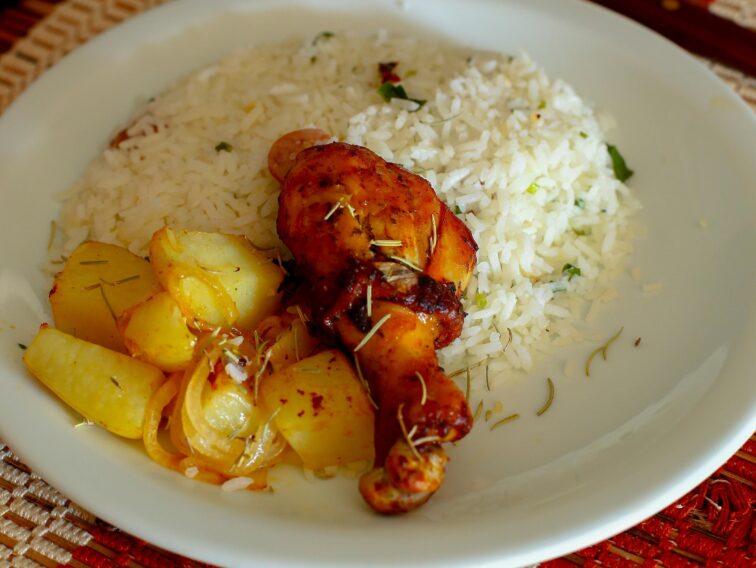

Potatoes and rice are two of the foods many people with digestive issues rely on because they are relatively easy to digest and a good source of carbs and energy. White rice, in particular, wins out in popularity because it is so simple that it digests high up in the small intestine and is quickly absorbed without feeding yeast or bacteria.
That is, as long as it’s not overeaten.
Half a cup of cooked white rice is an easy to digest serving, but most people eat more than that because rice is so palatable and slightly addictive. I don’t eat it often, but when I do, I notice how easy it is to keep going.
The good news is that you can turn white rice into something that actually feeds your beneficial bacteria in the large intestine by converting it into resistant starch.
Most people have heard of resistant starch but don’t know exactly how to make it. This is your opportunity to turn a simple staple into a strategic, microbiome-supporting food.
The same applies to potatoes, and I’ll also introduce you to other sources of resistant starch.
This post will help you take what you’re already eating and use it intentionally to support digestive health. It takes a bit more effort, but becomes second nature over time.
What is resistant starch?
Resistant starch is a type of starch that resists digestion in the small intestine. Instead of being broken down into glucose right away, it travels to the colon where it feeds beneficial bacteria.
Why it matters
Resistant starch feeds the strains of beneficial bacteria which directly help lower inflammation and support blood sugar balance. The strain is called Faecalibacterium Prausnitzii. It also builds the bifido bacterial phyla.
If you struggle with blood sugar swings, gut sensitivity, or inflammation, turning your rice and potatoes into resistant starch can make a difference.
The more beneficial bacteria you have, the lower your overall inflammation. When harmful bacteria dominate, inflammation increases. The good bacteria crowd the bad guys out.
How to turn simple carbs into functional fiber
You may have heard that cooking and cooling rice or potatoes creates resistant starch. That’s true, but it has to be done right. I’ll show you how.
How to make resistant starch
To fully convert rice or potatoes into resistant starch, they need to cool in the fridge for about 24 hours after cooking.
If you want to speed this up, you can use a “flash chill” method:
Spread the rice or potatoes on a baking sheet. Place in the freezer for about and hour then transfer to the fridge in a covered container.
- If you are sensitive to histamine, freezing them will slow down histamine growth on the rice. Freeze them in portion-controlled servings (about ½ cup) to help reduce reactions. Store in freeze until you eat it.
What happens when it cools
When freshly cooked rice or potatoes cool, the starch molecules (amylose and amylopectin) reorganize and form resistant starch.
Instead of being absorbed as glucose in the small intestine (which can spike blood sugar), they bypass digestion and reach the colon, where they are fermented by beneficial bacteria.
Reheating
There’s a common concern that reheating rice or potatoes destroys resistant starch.
It doesn’t if you keep the temperature moderate:
- below 130°C / 266°F
- light sauté, gentle steam, or low oven heat
Reheating and cooling a second time can actually increase the resistant starch content.
Making it practical
In my Treats That Heal cookbook bundle, I share a recipe for low-FODMAP rice muffins with added protein. It’s a simple way to turn resistant starch into something portable and satisfying. Cook the rice, bake it into muffins and let it cool in the fridge.
You can do the same with potatoes, mix with egg and a protein source to make savory muffins or patties.
Other sources of resistant starch
You can also find resistant starch in:
- oatmeal
- beans (if tolerated)
- green bananas
- green plantains
If you’re not used to these foods, introduce them slowly. As your microbiome shifts, you may notice temporary gas or bloating.
Green banana flour is especially versatile. You can use it for pancakes, muffins, breads, smoothies, or even to thicken soups.
Green bananas and plantains aren’t very appealing raw, but when sautéed in oil they lose their astringency and take on a mild, potato-like texture.
Plantain chips are one of my go-to snacks (I always carry them), though they are often cooked in seed oils. I still use them occasionally—the benefits can outweigh the downsides in moderation.
Bringing it all together
If you eat white rice or potatoes, you now have a way to turn them from a simple starch into a microbiome-supporting food.
With a bit of planning, you can shift from just eating for calories…to eating for function.
Practical takeaways
For better gut health:
- Keep portions of rice or potatoes to about ½ cup per meal
- Cool them for 24 hours to create resistant starch
- Reheat gently (below 130°C / 266°F)
- Freeze portions if histamine is a concern
- Reheating and cooling twice can increase resistant starch
- Introduce slowly if you’re sensitive
With a little intention, you can turn a “safe” food into a powerful tool for rebuilding your microbiome.
If you liked this post, stay tuned for my biome series, where I’ll show you how to crowd out gut overgrowths without relying on aggressive killing protocols.
If you want more step by step personalized support rebuilding your biome while minimizing reactions (we go far beyond probiotics), check out my new Brain, Body, Biome program.

Hi,
I’m just learning about resistant starch. Very interesting article. I try not to eat starch for weight control (66 5’8 145 and I’m in menopause) so weight gain is incredibly easy at this age.
I cook a lot and I’ll try a sweet potato from time to time, so the cooling off method is interesting to me. I have no idea how people can eat rice, white potatoes, grains and legumes and not blow up like a blimp. Even though the more I read about legumes, the more interested I am in adding them to my diet
( Thinking about the Blue Zones book)
Thank you for your article. If you have any feedback I’d love to hear it. Mostly how do you add these starches that have a lot of carbs and not gain a ton of weight.
Sincerely,
Liz